Peruvian cinchona bark
The Florios of SicilyPeruvian cinchona bark is both a fever remedy and a measure of the Florios’ changing place in Palermo’s trade. The bark’s journey from Peru and its processing into quinine powder make it a commodity of international commerce; in the Florios’ hands, it also becomes a practical means of treating the sick and a source of distinction in a market where scarcity can make medicine prohibitively expensive.
Origin, trade, and scarcity
Spices and medicinal goods reach European customers through long chains of handling and transport. Cinnamon or ginger may pass through dozens of hands, travel by mule or camel in caravans, cross the ocean, and arrive at European ports. Each leg raises the cost, leaving medicinal spices available chiefly to those able to pay. By the early nineteenth century, British and French merchants are bringing colonial goods—including medicinal herbs—into an expanding market, while Palermo’s aromatari operate through a guild of their own.
The bark’s value becomes urgent during a violent fever epidemic at the end of 1799. Funerals accompany the Christmas season, and the Florios’ provisions nearly run out. Larger shops, including Canzoneri’s, charge prices described as the price of gold, even as many people need the remedy. The shortage exposes the human consequences of a market in which access to medicine depends on supply and purchasing power.
A remedy and a reputation
At the counter, a spoonful of dark bark is put into a mortar for a feverish patient. Paolo explains to the worried woman that it comes from the cinchona tree in Peru and helps reduce fever. When she counts the coins in her pocket, the Florios waive payment that time. She worries about what the other sellers will do; Paolo answers by distinguishing the family’s conduct from theirs and identifying them as the Florios. The exchange gives the bark a significance beyond its medicinal use: the family’s willingness to forgo a sale becomes part of the service and identity they claim for themselves.
Scarcity also brings customers who previously would not have trusted the Florios. After a fresh load of spices arrives with the new year, news spreads and the shop fills. Sellers come seeking bark they cannot find elsewhere. Carmelo Saguto, astonished by the activity near Piano San Giacomo, pushes into the store and demands to see the stock. Paolo pours a handful of Peruvian bark onto the counter and says, “Peruvian bark. Just arrived and already sold out. Eat your heart out, Saguto.” Saguto dismisses it as “Mud of the earth,” but the next day Canzoneri announces other spices, lower prices, and special terms for loyal customers. His response comes after the Florios have already drawn customers and attention away from his business.
From stock to apothecary
The Florios’ supply and storage arrangements turn the bark trade into a larger operation. They rent a warehouse within the Palazzo Steri property, behind the customs offices, where spices bound for other ports or awaiting sale to merchants can be kept. The arrangement allows import tariffs to be paid when goods actually enter Palermo rather than when they are merely stored in transit. Their stock includes goods from India obtained through British traders, French colonial products bought through Italian sailors, and other Mediterranean supplies. As the business grows, the Via dei Materassai storeroom proves too small.
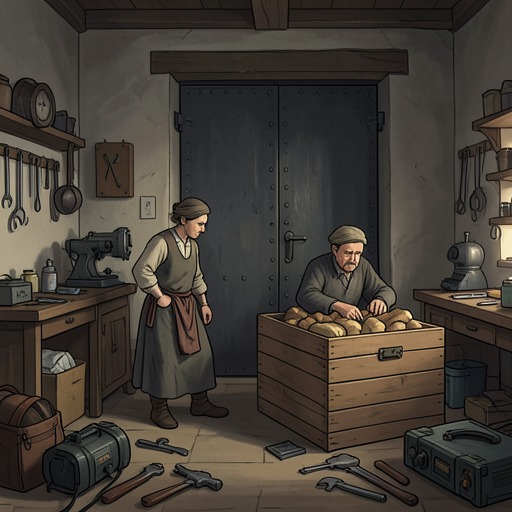
After six months of work, the scale of the enterprise is visible in the shop and its stores. New majolica jars and pots bear the Florio name; sacks of Peruvian cinchona bark wait in warehouses at Via dei Materassai, Piano San Giacomo, and the customs offices, ready to be ground so quinine powder can be extracted. Aromateria Florio has become the apothecary Ignazio had imagined. Among the new equipment and stock, one item remains from the old store: the weighing scales Paolo had used since he began working. The bark thus belongs to a transformation that does not erase the shop’s earlier history.
Commodity, processing, and memory
The bark’s route does not end at importation. The Florios store it in several locations, then prepare it for grinding and the extraction of quinine powder. Its commercial value therefore depends on coordinated stages of acquisition, warehousing, processing, and sale. The same commodity that is briefly scarce at the counter becomes part of a repeatable supply system, with the Florios positioned not only as retailers but as organizers of the trade and its transformation into medicine.
Much later, tuna from the Arenella tonnara brings the bark’s history back into view through an associated memory. While watching Giulia open a can of tuna in brine, Vincenzo recognizes an image of the kitchen at Piano San Giacomo and a figure taking fish from an earthenware pot sealed with wax. The recollection connects the later household scene to the earlier work of the Florio business, where medicinal bark and other goods moved through the same expanding world of trade. Across these appearances, Peruvian cinchona bark marks the point where an imported commodity becomes a remedy, a business asset, and part of the family’s remembered beginnings.